On Friday, 20 July 2001, the Israeli newspaper Yedioth Ahronoth published an article by Amotz Shorak titled “Heavy Water.” It dealt with the period before the Israeli Navy had submarines and with one of the first attempts to acquire them. Yosele Dror and the Navy’s senior leadership examined several possibilities. The German option was not ruled out; Sweden, Norway, France, Denmark, the Netherlands and Britain were also considered. It is worth remembering that the Israeli Air Force’s first fighter aircraft were the famous Luftwaffe Messerschmitt Bf 109s, and that the IDF used German Mauser rifles until the mid-1970s, calling them “Czech” for reasons of kosher practice and convenience. Today the Chief of Staff travels in a BMW, and the IDF has considered using Mercedes off-road vehicles. Three of the IDF’s most complex, modern and expensive weapons systems were built in German shipyards. Few people are surprised today by security ties with Germany or by the use of German weapons and equipment. In the 1950s, so soon after the war and the Holocaust of European Jewry, things were very different.
The newspaper article is fair and well written. For historical accuracy, however, I have chosen to present the account in the words of the people involved. What follows is the story of Yoske Rom, along with a few words about him.
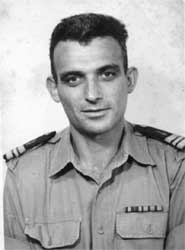
Joseph (“Yoske”) Rom was a member of the Palmach Naval Companies (Palyam) and one of the early members of the Israeli Navy. He served with Yosele Dror in the Palmach’s naval sabotage unit. From the beginning, Yoske followed the submarine procurement efforts and, in a real sense, stood at the birth of Submarine Flotilla 7. He took part in many of the Navy’s submarine procurement efforts during the 1950s and 1960s. His account describes the first attempts to acquire German submarines. The relationship with Germany began in the 1950s, long before the Gal- and Dolphin-class submarines were built. I have left his account unedited; it is important to the history and heritage of the flotilla. I have added the story of the German Type XXIII submarines that follows. — Uri Dotan-Bochner
Yosele Dror returned to permanent service in the mid-1950s. It can be said that this was the beginning of the Israeli submarine era. A few years earlier, in 1950, he had been forced to leave both the reorganizing 13th Flotilla and the Navy.
Navy Commander Shmuel Tankus brought Yosele back to the IDF as part of a broader effort to return well-known Palyam commanders to service. Yosele agreed to return on the condition that he handle the acquisition of submarines as a new capability for the Navy. He enlisted and was sent to study in France.
I had known Yosele for many years. We were friends and came from the same world. He was one of the Palyam commanders in Course 5, until the British arrested him while he was helping bring immigrants ashore at Shefayim in 1945. Later, in Cyprus, we both served in Yohai Ben-Nun’s sabotage unit. Yosele took over command after Yohai was arrested and sent to Israel, and I took part with Yosele in the sabotage of the deportation ship Ocean Vigour. Yosele was arrested in Cyprus, escaped from prison, and I got him off the island when I returned from Israel in a fishing boat. Between 1950 and 1955 we saw little of each other, because I was studying engineering in Israel and abroad.
When Yosele returned to service, I was already head of Equipment Branch 4 in the Navy’s technical establishment. I knew in general what he was doing and where he was working. Whenever he was in Israel, we would meet, talk and exchange interesting stories.
In the spring of 1958, the Navy Commander summoned me and told me to prepare for a trip to Europe to discuss submarine procurement, together with him and Yosele Dror. At the time, I was a student at the Advanced Officers’ Course at Bat Galim, under Colonel Shlomo Arel. At first I had no idea what the trip was about, and I knew nothing about submarines. Naturally, I obtained permission from the course commander to be away as long as necessary.
Yosele had trained on submarines in France, including German submarines. At the time, the French Navy operated several German boats. The French told us that the Germans had raised two Type XXIII submarines from the seabed and operated them for several years. They were small boats of a little over 200 tons, scuttled by the Germans in the Baltic at the end of the Second World War. Some of these submarines were captured by the Allies and served for several years in the Soviet and Norwegian navies. France received one Type XXIII, but it sank in an accident in Toulon harbor in late 1946. The French also operated several German Type VII, IX and XXI submarines, some for training and others in the fleet’s operational service.
Yosele saw that these boats might offer an opportunity for the Israeli Navy, and began pursuing the idea, first with senior French submarine officers and then with the Israeli Navy Command and the General Staff.
Yosele’s plan was to establish a submarine flotilla based on refurbished German Type XXIII boats, while also ordering new submarines of about 350 tons, like those Germany had begun building for the Norwegian Navy within NATO and for its own navy. The French were expected to make an important contribution by training the new Israeli crews to operate a German submarine.
I knew nothing of Yosele’s and Shmuel Tankus’s earlier work on German submarines. Only recently, in a conversation with Tankus, did he tell me that before our joint trip to France and Germany he had traveled there himself to meet the French and German naval commanders. According to Tankus, the initiative came from Chief of Staff Moshe Dayan, and our trip followed from that earlier visit. (The change of Chiefs of Staff took place at the end of January 1958.)
In any case, at the end of April 1958, Shmuel, Yosele and I left for Europe. We first went to Paris. With the help of the IDF attaché there, Colonel Emanuel Neshri, we met the French Navy Commander and his senior aides. The results were very positive: the French agreed to train our crews on their submarines, including German Type XXIII boats; they were willing to share their experience in salvaging and refurbishing the small German submarines; and they recommended that we acquire and operate them. In their view, there was no better or less expensive way to enter the difficult field of submarine operations. They suggested that after our visit to Germany we return to continue the discussions and prepare a work plan.
From Paris we continued by train to Cologne. There we were met by Colonel Avigdor Tal, head of the Ministry of Defense mission, who had arranged many meetings for us: at German Navy Headquarters in Bonn, in Hamburg and Kiel, and in Hanseatic cities such as Bremen, Bremerhaven and Wilhelmshaven. I will pass over what we felt when we set foot on German soil for the first time. I wrote at length about it in my private memoirs, and many people better than I have written about it before. We stayed at the guesthouse of the reparations mission, because at the time IDF personnel were not allowed to stay in private hotels in Cologne or Bonn.
The talks in Bonn were very positive, and we were given to understand that we would receive the German Navy’s full support. At the same time, we were told that we would have to deal directly with German companies about the salvage work. The German Navy assigned us a liaison officer, Lieutenant Colonel Robder, who was to meet us in Hamburg.
Robder was an exceptionally capable officer. As I remember him, he was a submariner who had served in submarines during the war. We spent many hours with him and learned a great deal about both the old submarines and new construction in the shipyards. He also introduced us to a German company specializing in raising wrecked ships from the seabed. Its representatives described their experience and helped us understand what the work would involve, subject of course to approval by the authorities.
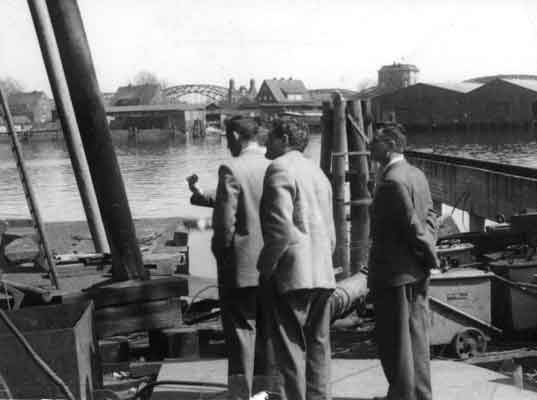
We spent several days in the north. In Kiel we visited Howaldtswerke shipyard, where we looked at the new 350- and 100-ton submarines under construction. We also visited Wilhelmshaven and Bremerhaven. In Bremerhaven, we focused on the Atlas plant, which made equipment for submarines, especially sonar. (Atlas later became responsible for the sonar, weapons and control systems of the Dolphin submarines — A.D.) I remember the manager, Dr. Fischer, a Prussian-looking man with a scar across his face. The plant had been one of the German Navy’s most important facilities during the war; even thirteen years after the war, a substantial part of it was still in ruins.
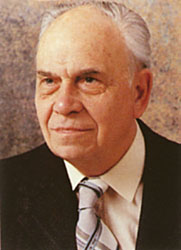
Dr. Fischer’s relative, Dr. Ulrich Gabler, one of Germany’s leading submarine designers, was also at the meeting. He shared important information with us about both old and new submarines. At the time he was out of work, and was no doubt hoping that we might offer him work. In time, as is well known, our relationship with Dr. (later Professor) Gabler and his company IKL in Lübeck grew closer and brought great benefit to the Israeli Navy.
The visit ended, and we set out for Paris by way of Brussels. Avigdor was kept informed throughout, and we also prepared a detailed written report for him. During the entire visit we did not enter a military base or see any of the submarines we were seeking. Even so, we had learned enough and were convinced that, if the necessary approvals were granted, we would return to the area and take the plunge.
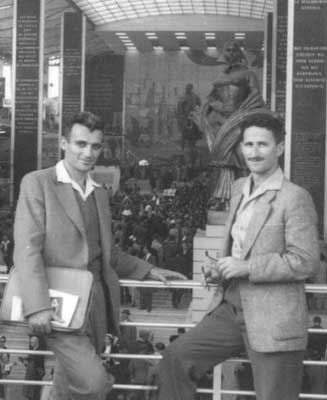
There was a short gap before our scheduled meetings at French Navy Headquarters in Paris. We used it to travel through Brussels and visit the international exhibition at the Atomium. What an experience!
The meetings in Paris were mainly for reporting back and as a courtesy to commanders who had shown sympathy and a desire to help. We all agreed that the next move belonged to the German Navy and the salvage company. If their answers were positive, it would be easy to settle the remaining details with the French. We returned to Israel tired but satisfied: I went back to the course, Shmuel to the commander’s chair, and Yosele to continue his efforts on procurement and on preparing a group of volunteers to train in France.
In the summer of 1958 I was sent to Kiel again. Yosele and I spent hours and days with our acquaintance Robder. We had no shortage of worries and frustration with the cheerful, often-drunk Robder, but at the end of the day we got everything we had asked for and forwarded it to Avigdor in Cologne — the redhead.
That ended my part in the early phase described above. I returned to my work as head of Equipment Branch 4 until I was summoned again by the Navy Commander. I accepted an offer to go to England as head of the technical team, responsible for refurbishing the S-class submarines that had just been purchased.
In the late summer of 1958 I was fully occupied with my work and even had one eye on the outgoing head of the Navy’s technical branch, Avraham Zakai, who had been sent to assess the possibility of establishing a civilian shipyard in Haifa. I was neither involved in nor briefed on the secret details of the submarine project, so I cannot explain all the events that led to abandoning the German submarines and purchasing the British S-class boats Tanin and Rahav instead. To understand what happened during those few months in the second half of 1958, it is worth reading the extensive correspondence between Yosele and Shmuel from that period and, as I mentioned earlier, speaking with people who are still with us.
I can say this: throughout his life Yosele held Shimon Peres in high regard and believed that Peres was the person who made it possible for the Navy to acquire submarines. In Yosele’s view, Peres alone steered the effort and made the decisions in favor of submarine procurement, at a time when the Chief of Staff and many of his staff officers were opposed, and opinion within the Navy itself was divided. The question put by the Chief of Staff was: “Submarines — at the expense of what?”
I can also say that the prevailing view about the shift from German to British submarines was this: despite repeated efforts, it proved impossible to find suitable sunken submarines at depths from which they could be raised. The searches failed, so other submarines that were within reach had to be considered. The British boats seemed to meet the need, were attainable, and were “a bird in the hand.” Shimon Peres took up the effort and led it, with several excellent people around him. With God’s help, he succeeded, and submarines were eventually added to the Israeli Navy.
Finally, it must be said that the effort to pursue German submarines never stopped. But that is another story, deserving its own place. And I imagine that wherever it belongs, its story is there too.
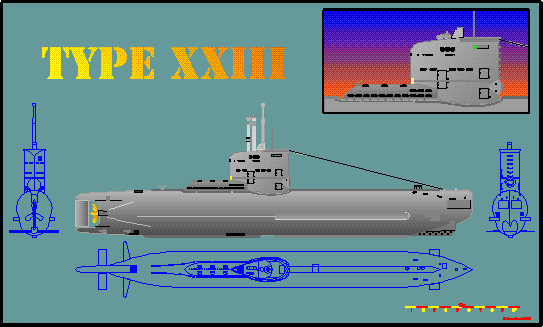
In the last year of the Second World War, two new submarine designs appeared. The Germans called them Elektro-Boats, or “electric boats.” They were revolutionary in their propulsion and design, and influenced submarine construction during the two decades after the war. Until the Elektro-Boats were built, German submarines were essentially surface ships with very limited ability to remain submerged. Wolfpack attacks on Atlantic convoys were carried out on the surface, not underwater; diving was used mainly to escape after an attack. Once radar entered service on Allied escort ships and aircraft, German submarine losses rose sharply, and the advantages of surface wolfpack tactics disappeared. In 1943, Germany therefore began preparing submarines that could remain underwater for longer periods. Despite shortcuts and a reorganization of the construction process, the first boats were launched only about a year before the war ended.
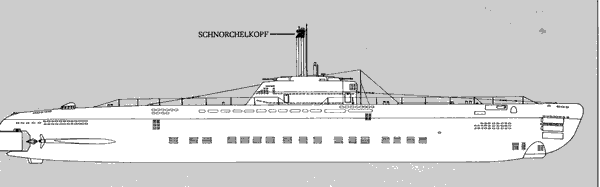
The Germans believed that, had these submarines been available two years earlier, they would have won the Battle of the Atlantic. The larger Type XXI was designed for ocean operations; the Type XXIII was a coastal submarine intended for the North Sea, the English Channel, the Mediterranean and the Black Sea. They carried more batteries and a new device, the snorkel. The snorkel allowed a submarine to remain submerged after its batteries were depleted and recharge them while running its diesel engines, without being detected by the radar of that era.
The first Type XXI was launched in April 1944; the last was launched in April 1945, less than a month before the war ended. Sixty-one Type XXIII submarines were built before the end of the war, but only six saw active service, and then for less than three months, from late January to early May 1945. Even in that short period they proved effective: they were fast underwater, easy to operate and maneuver, difficult to detect, and quick to evade.
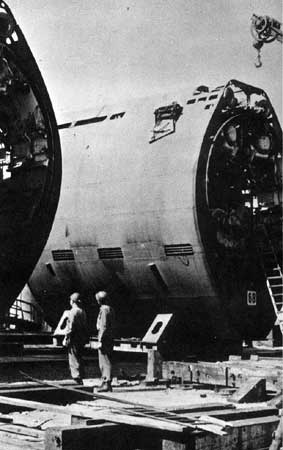
One major drawback of the Type XXIII was its small torpedo load: two torpedoes, with no way to reload at sea. U-2336 sank the last ships of the war: two British merchant ships, sunk one day before the end of the war in Europe. The sinkings resulted from one of the submarine’s shortcomings. Its radio equipment was faulty, and it did not receive the surrender order issued on 4 May.
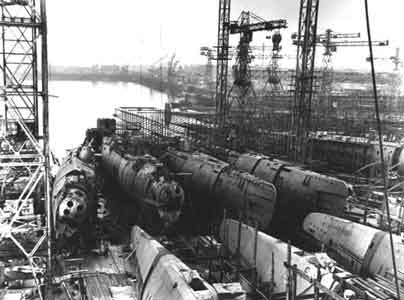
These submarines were also among the first to be built from sections made at several shipyards and then assembled into a single boat. This method shortened construction time considerably.
During their three months of operations, five Type XXIII submarines hit and sank five ships totaling 14,601 tons. The Germans scuttled 31 boats of this type during the first week of May 1945. The Allies captured 20 and scuttled them off the coast of Ireland in the winter of 1945. Three served for a time after the war in the British, Soviet, French and Norwegian navies.
After the Federal Republic of Germany was established in 1949, the German Navy was rebuilt. Until Germany joined NATO in 1960, its armed forces faced many restrictions. Among them, Germany was not allowed to build or use submarines displacing more than 300 tons. The Type XXIII therefore seemed suitable for rebuilding the German submarine fleet. In 1956, the Germans raised two Type XXIII submarines, refitted them and operated them until the mid-1960s. They were renamed U-Hai (“Shark”) and U-Hecht (“Pike”). U-Hai sank in an accident in 1966; 18 of its 19 crew members died.
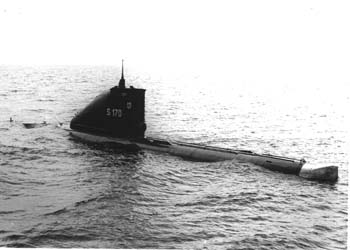
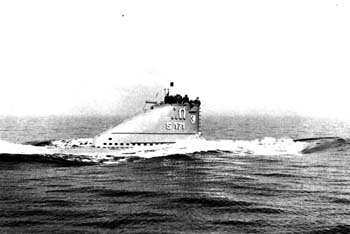
Technical specifications
| Displacement | 234 tons surfaced; 258 tons submerged |
|---|---|
| Length | 34.68 m |
| Speed | 9.7 knots surfaced; 12 knots submerged |
| Armament | Two torpedo tubes and two torpedoes; no reloads at sea |
| Crew | 14–18 |
| Maximum depth | 180 m |